

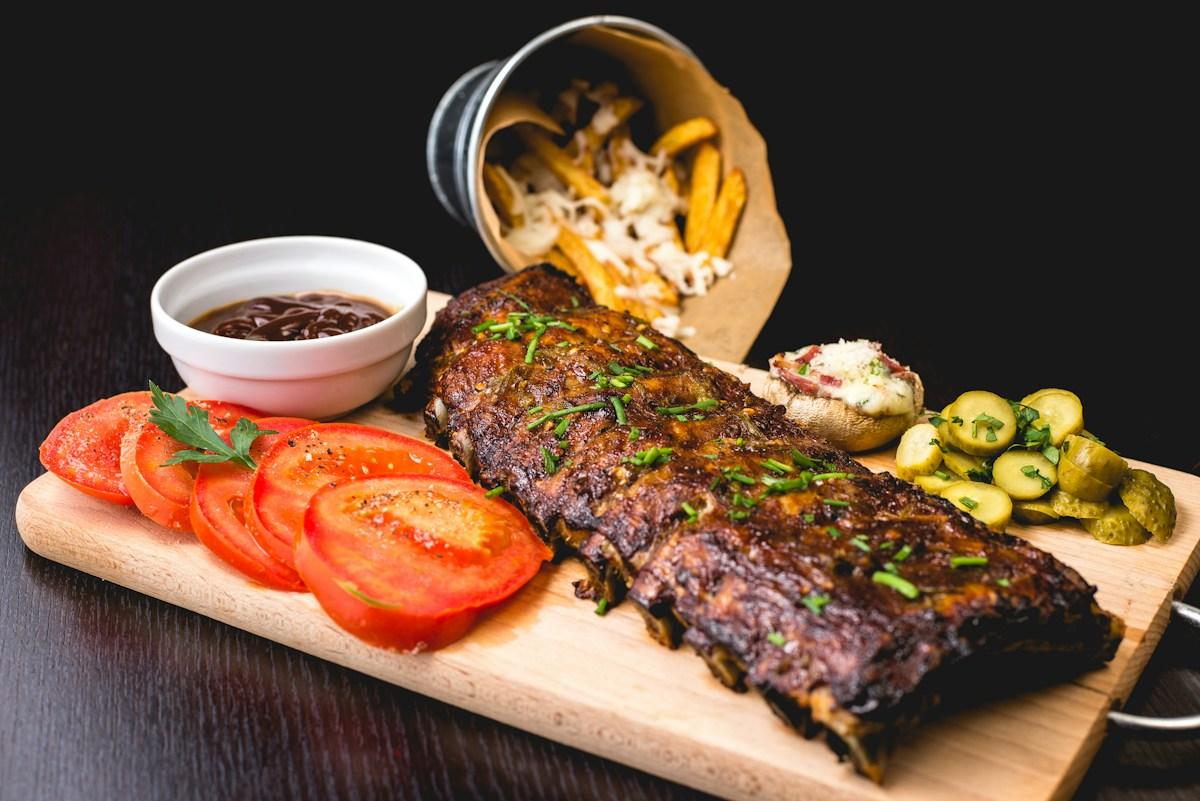
Wood-smoked halal brisket is rare in Southern California because it needs three things most kitchens do not have: a smoker that has never held pork, beef that is hand-slaughtered and certified, and about 12 hours of hickory smoke for every batch. Ribs 'n' Kabobs in Artesia cooks brisket this way, and it is worth the drive from Cerritos, Long Beach or Anaheim for a plate of Brisket Burnt Ends or Loaded Fries.
This post explains what makes real smoked brisket different from roast beef, why the halal version is so hard to find in Los Angeles County and Orange County, and how to order it from our menu.
What is wood-smoked brisket, and why is it different from roast beef?
Brisket is a cut from the chest of the steer. It is a hard-working muscle, full of connective tissue, and if you cook it fast it comes out tough and dry. Smoking changes that. The meat sits in a smoker, away from the direct flame, while hickory smoke and gentle heat work on it for hours. The connective tissue slowly softens, the fat renders, and the outside builds up a dark, peppery crust that barbecue people call bark.
A roast in the oven can be good. It cannot taste like this. Smoke flavor only comes from burning wood, and tenderness in brisket only comes from time. There is no shortcut that gives you both.
At Ribs 'n' Kabobs we prepare brisket low and slow over hickory for about 12 hours. That is the same method traditional barbecue houses use across the country. The difference is that every piece of beef in our smoker is 100% Zabiha Halal.
Why is halal smoked brisket so hard to find in Southern California?
Southern California has plenty of barbecue. It also has plenty of halal restaurants. The overlap between the two is tiny, and there are three reasons for that.
Reason one: the smoker has to be halal-only
Most barbecue restaurants smoke pork ribs, pork shoulder and sausage in the same pit as their beef. The drippings, the grates and the smoke itself touch every cut. For a Muslim diner that makes the brisket off limits, no matter where the beef came from.
A halal smokehouse has to be built differently from day one. Our smoker has never held pork and there is no alcohol anywhere on site. That is not a small adjustment to an existing kitchen. It is a different kind of restaurant.
Reason two: the beef has to be hand-slaughtered and certified
Zabiha halal beef comes from an animal slaughtered by hand by a Muslim who recites the name of God over it, with the blood fully drained. Brisket from a regular meat distributor does not meet that standard, and a restaurant cannot simply write the word halal on the menu and move on.
Ribs 'n' Kabobs is certified by HFSAA, the Halal Food Standards Alliance of America, which audits where our meat comes from. You can read their standard at hfsaa.org, and we wrote about what the certification means for our kitchen in our HFSAA certification post. Sourcing certified brisket in the quantities a smokehouse needs takes supplier relationships that most kitchens never build.
Reason three: twelve hours is a long time
The third reason is simple. Brisket cannot be rushed. About 12 hours is a long stretch, and someone has to tend the fire and watch the meat the whole time. Many halal restaurants run grills, tandoors and curry pots that turn food around in minutes. Adding a smoker that ties up a cook for half a day is a big commitment, and most never make it.
Put the three together and you get a very short list. Ribs 'n' Kabobs is one of the very few halal BBQ houses in Southern California, and brisket is a big part of the reason. Our guide to halal BBQ in Los Angeles covers the rest of what comes out of the smoker.
How does Ribs 'n' Kabobs smoke its brisket?
We keep the process honest and old-fashioned. The brisket gets our house rub, then goes into the smoker over hickory wood. The heat stays low and the lid stays mostly shut. Over about 12 hours the smoke settles deep into the meat and the fat renders down until the brisket is tender enough to pull apart with a fork.
Hickory is our wood for everything in the smoker, including the Back Ribs, Short Ribs and Dino Ribs. It gives a strong, slightly sweet smoke that holds up to beef without turning bitter.
We do not run a standalone sliced brisket plate on the regular menu. Instead the brisket shows up in four dishes.
How can you order brisket at Ribs 'n' Kabobs?
Here is where the brisket lives on our menu:
- Brisket Burnt Ends. An appetizer of the richest, darkest pieces from the smoker, tossed in sauce. Small portion, big flavor, and the best way to taste the smoke on its own.
- Loaded Fries. Fries topped with smoked brisket and BBQ sauce. A full meal for one or a shared plate for the table.
- Drip Beef Sandwich. Smoked brisket piled on bread with the juices soaked in. Messy in the good way.
- Brisket Weekend Special. A weekend plate built around the brisket. Ask what it is when you visit.
If you are deciding between brisket and ribs, our guide to beef ribs versus brisket walks through every cut and sauce.
Which brisket dish should you try first?
For a first visit, order the Brisket Burnt Ends. They show the bark, the smoke and the tenderness in one bite, and they are small enough to share while you wait for ribs or kabobs. If you are hungry, the Loaded Fries are the easy pick for families from Norwalk and Cerritos, and the Drip Beef Sandwich is the one to take back to the office.
On a weekend, ask about the Brisket Weekend Special too.
Visit us in Artesia
Ribs 'n' Kabobs, 18925 Norwalk Blvd, Artesia, CA 90701, is a family-owned, HFSAA-certified, 100% Zabiha Halal BBQ and grill restaurant serving Los Angeles County, Orange County and the rest of Southern California since 2014. We are a short drive from the Pioneer Boulevard Little India district and easy to reach from the 91 and the 605.
For directions and ordering, see the contact page. If you are planning a party, the brisket and ribs travel well for catering too.